

All blogs
Manual Handling in Construction: Responsibilities at Every Level
Advice
2026-04-29 16:02:43.43064+00
Author Nigel Lewis BA (Hons) CMIOSH OSHCR PIEMA
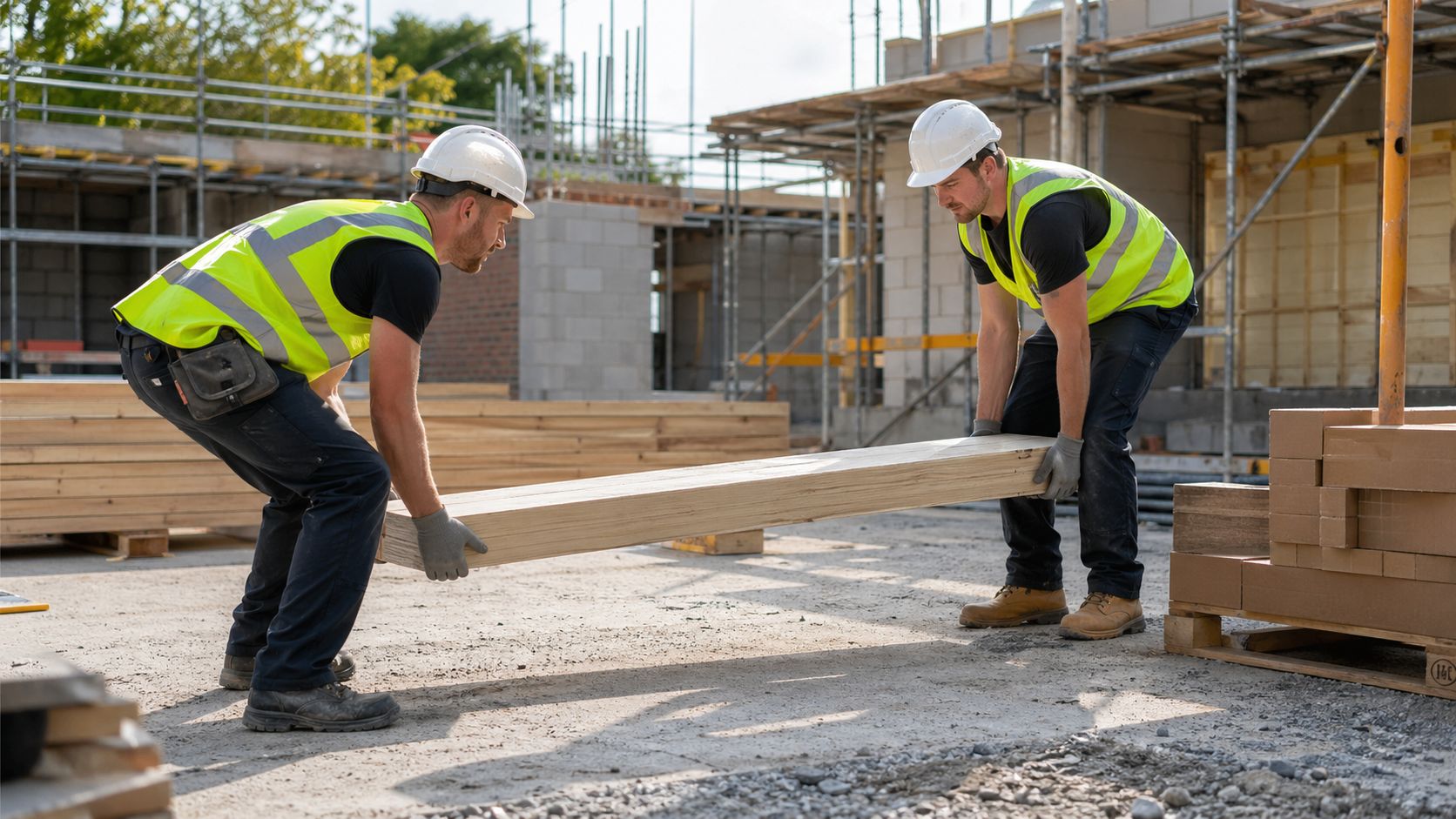
Manual handling injuries remain one of the most common causes of workplace harm in UK construction. Strains, sprains and musculoskeletal disorders arising from lifting, carrying, pushing and pulling account for a significant proportion of lost working days across the sector. Despite being largely preventable, they often persist due to insufficient management attention at the senior level.
The Legal Framework
The Manual Handling Operations Regulations 1992 require employers to:
- Avoid hazardous manual handling operations where reasonably practicable
- Assess the risk of injury from any operations that cannot be avoided
- Reduce the risk of injury to the lowest level reasonably practicable
This hierarchy applies across all sectors, but in construction, where materials are heavy, surfaces are uneven, and time pressure is constant, the management challenge is particularly acute.
The TILE Framework
Manual handling risk assessments in construction typically use the TILE framework to structure the evaluation:
- Task - what movements are required, including twisting, stooping, or reaching
- Individual - the physical capability, training and experience of the worker
- Load - the weight, shape, stability and handling characteristics of the object
- Environment - the workspace, floor conditions, temperature and space available
Each factor must be assessed and addressed. A risk assessment that focuses only on the weight of the load without considering the environment or the individual is incomplete and potentially misleading.
Avoiding and Reducing Risk
Where manual handling cannot be eliminated, it should be redesigned or mechanised where practicable. This might include:
- Specifying materials in smaller or lighter units at the procurement stage
- Using hoists, trolleys, pallet trucks or other mechanical aids
- Planning storage and delivery to minimise carrying distances
- Ensuring adequate rest breaks for workers in physically demanding roles
These solutions require decisions at the planning and management level, not just at the point of the task. Senior professionals who integrate manual handling risk into project planning consistently achieve better outcomes than those who leave it to individual workers to manage on the day.
The Senior Professional's Role
Construction site managers and health and safety practitioners at Level 6 and 7 are expected to lead the integration of ergonomic and manual handling considerations into project planning, method statements, and procurement decisions. This is a strategic responsibility.
Those developing their capabilities at this level can explore programmes such as the Level 6 NVQ Diploma in Construction Contracting Operations or, for senior management, the Level 7 NVQ Diploma in Construction Senior Management, both of which require candidates to demonstrate competence in managing health, safety and welfare across their operations.
Training Is Not Enough on Its Own
Manual handling training is widely delivered across construction sites, but training alone does not prevent injuries. It must be supported by task-specific risk assessments, adequate equipment, effective supervision, and a culture that encourages workers to raise concerns about unsafe handling tasks.
Supervisors play a critical role in reinforcing safe practice on a daily basis. Supporting their development, including through structured qualifications, is one of the most effective investments an organisation can make in reducing manual handling injuries.
At SHEC, we support construction professionals at every level to build the competence needed to manage manual handling risk effectively and in line with current UK legislation.

Author:
Nigel Lewis BA (Hons) CMIOSH OSHCR PIEMA








Related blogs
 Advice
Asbestos in Construction: What Senior Professionals Must Know
Advice
Manual Handling in Construction: Responsibilities at Every Level
Advice
Risk Assessments and Method Statements: Getting RAMS Right
Advice
Work at Height in Construction: Managing the Risk

Driving Culture and Performance in HS
Education and Training
Strategic Environmental Management – A Key Requirement at Level 7
Near Miss Reporting in Construction
The Competent Person in Construction: More Than a Certificate
How to Prepare for a HSE Construction Site Inspection
Advice
Understanding CDM 2015: A Practical Guide

2024-06-12 16:20:00Advice
Construction Site Inspections: Why They Matter and What to Expect
Education and Training
How to Apply for a CSCS Card: A Step-by-Step Guide for UK Construction

Education and Training
Does a Leisure Facility Require a Health and Safety Certificate?

Education and Training
Successful Health and Safety Case Studies in the UK Leisure Industry

Education and Training
Training for Health and Safety in Leisure

Education and Training
Health and Safety Training Programs in the Leisure Industry

Preventive Measures
Case Studies on Health and Safety Success in Leisure

Preventive Measures
Health and Safety in Leisure Centre Changing Rooms

Workplace Culture
Health and Safety Procedures in Hotels

Workplace Culture
Health and Safety in a Leisure Centre